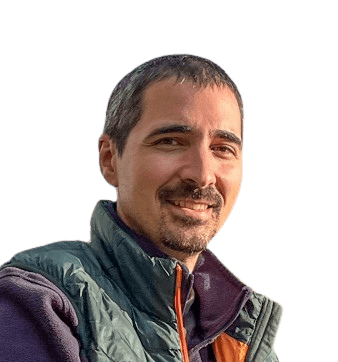







Here is the expanded biography, incorporating the specific metrics on his media presence, international expeditions, organizational leadership roles, and academic career at Østfold University College.
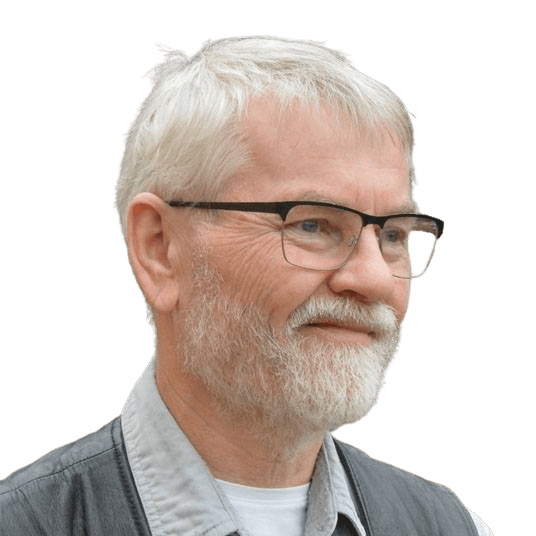
Erling P. Strand — Biography & Role in Project Hessdalen
Academic Career & Early Discovery (1982–1988)
Erling P. Strand’s involvement with the mysterious lights of Hessdalen began in September 1982. Driven by curiosity after a wave of local sightings, Erling and a group of friends pitched a tent camp in the valley and stationed themselves across three different mountains. Shortly after setting up, they witnessed a large, powerful light moving back and forth, ascending, descending, and periodically projecting a beam of light. Returning to Oslo, Erling urged his colleagues at the research department where he worked to investigate the phenomenon, persevering despite advice to leave it alone.
Parallel to his field research, Erling built a long career in academia. He served as an Assistant Professor at Østfold University College from 1988 until his retirement in 2023, primarily lecturing on computer science topics.
Founding Project Hessdalen & Scientific Groundwork (1983–1985)
In 1983, when official state-supported institutes showed no interest, Erling co-founded Project Hessdalen alongside four colleagues. He assumed primary responsibility for the scientific and technical direction of the early fieldwork:
- Field Research (1984 & 1985): Erling led scientific research during the major field operations. In the intense 1984 winter campaign—involving 40 volunteers over five weeks—he oversaw a trailer headquarters equipped with radar (Atlas 2000), seismographs, magnetometers, spectrum analyzers, Geiger counters, infrared viewers, lasers, and optical cameras fitted with diffraction gratings.
- Historical First Report: Erling authored the final technical report for the 1984 fieldwork. Published as one of the world's first systematic, instrumented scientific studies of unidentified light phenomena, it gained international historical significance. To ensure academic engagement, Erling and the founders deliberately framed the research around "light phenomena" rather than "UFOs" to avoid community stigma.
Internationalization, Expeditions & Organizational Leadership
Recognizing that solving the phenomenon required broader expertise, Erling took the initiative in 1993 to organize an international academic workshop held in 1994 with researchers from eight countries. This initiative fundamentally changed global media coverage, shifting the narrative from sensationalized entertainment to serious scientific inquiry.
Beyond Hessdalen, Erling participated in scientific expeditions across the globe, including fieldwork in the Australian Outback, Mexico, and multiple locations in the United States. His expertise led to key appointments in international scientific bodies:
- Society for Scientific Exploration (SSE): Served as the European Representative from 2007 to 2013, where his primary task was organizing SSE conferences across Europe.
- International Coalition for Extraterrestrial Research (ICER): Serves as the Norwegian representative.
- UFOdata.net: Serves as a consulting scientist.
- International Earthlight Alliance (IEA): Acted as key personnel throughout the duration of the organization's operations.
The "Blue Box" & Automated Monitoring (1998–2023)
In 1998, Erling established the Automated Measurement Station (AMS), known as the "Blue Box"—a blue shipping container equipped with computers, cameras, and sensors designed for 24/7 continuous monitoring.
- Data Curation & Internet Integration: Erling personally managed the automated station for decades. He routinely reviewed motion-triggered images and videos uploaded from the field, curating selected captures for public view on the project's website.
- Historic Captures: Under his management, the station recorded notable events, including a famous light phenomenon captured in December 1999.
Educating the Next Generation: Science Camps (2002–2019)
In 2002, alongside his colleague Bjørn Gitle Hauge from Østfold University College, Erling co-developed and led the annual Science Camp. Every September until the COVID-19 pandemic hit in 2020, Erling helped guide classes of middle school, high school, and university students through hands-on field research in Hessdalen. Over 650 students participated during its 18-year run, gathering iconic photographs and video evidence.
Global Media Presence & Public Outreach
As the primary public face of Project Hessdalen, Erling achieved massive international outreach. His media contributions include:
- Broadcasting: Appearing in over 100 TV shows (ranging from news to talk shows and documentaries, including the Discovery Channel, History Channel, and French, German, Swedish, Danish, and Norwegian TV/NRK) and participating in 120 radio broadcasts.
- Lectures & Digital Media: Delivering 180 scientific and public presentations worldwide, as well as appearing as a guest on more than 30 podcasts.
- His outreach built an online presence that attracts visitors from over 90 countries every month.
Honorary Recognition & Legacy (2023–Present)
Following his retirement from Østfold University College in 2023, Erling ensured the project's long-term survival by transitioning operational leadership to CEO Fred Pallesen and stepping into the role of Chairman of the Board.
He served as Chairman from 2023 until September 2026, when he stepped down from the board during the Annual Meeting. In recognition of his decades of visionary leadership, pioneering research, and unwavering dedication, he was awarded the title of "Lifetime Honorary Member of Project Hessdalen." Today, his legacy continues to inspire the global community of researchers carrying the project forward.